The 1844 Advent experience
Daniel 8:14; Revelation 14:6–7
Follow the prophetic movement, the passing of the time, and the sanctuary light that explained the disappointment.
Read the movement’s history →Press Esc to close · / or Ctrl+K to open
Welcome to the original Advent witness
The old paths. The waymarks. The high heaps.
The landmarks have not moved. Men have moved!
Open the original books. Unroll the prophetic charts. Follow Jesus in the heavenly sanctuary. Let the pioneers speak—and test every teaching by the Word of God.
“Remove not the ancient landmark, which thy fathers have set.”Proverbs 22:28 · KJV
“Set thee up waymarks, make thee high heaps: set thine heart toward the highway, even the way which thou wentest: turn again, O virgin of Israel, turn again to these thy cities.”Jeremiah 31:21 · KJV
01 · The original landmarks
Ellen G. White’s Standing by the Landmarks, Manuscript 13, 1889, identifies the Advent foundation through the 1844 experience, the heavenly sanctuary, the three angels’ messages, God’s commandments and the faith of Jesus, the temple and ark, the Sabbath, and the nonimmortality of the wicked.
A landmark marks a boundary. A waymark points out the road. A high heap stands as a visible memorial. We are asking what the Lord established through His Word—not what a committee has voted, a corporation has registered, or a textbook has declared.
The passing of the time in 1844 was a period of great events, opening to our astonished eyes the cleansing of the sanctuary transpiring in heaven, and having decided relation to God’s people upon the earth, [also] the first and second angels’ messages and the third, unfurling the banner on which was inscribed, “The commandments of God and the faith of Jesus.” One of the landmarks under this message was the temple of God, seen by His truth-loving people in heaven, and the ark containing the law of God. The light of the Sabbath of the fourth commandment flashed its strong rays in the pathway of the transgressors of God’s law. The nonimmortality of the wicked is an old landmark. I can call to mind nothing more that can come under the head of the old landmarks. All this cry about changing the old landmarks is all imaginary.
Ellen G. White, Manuscript 13, 1889; The Ellen G. White 1888 Materials, p. 518.2. Read the passage and surrounding paragraphs.
In the surrounding Minneapolis discussion she rejects the claim that every fresh presentation of Bible truth moves a landmark. Established truth and genuine new light belong together in the light of Scripture.
These seven study headings unfold the interconnected truths in her statement; her manuscript does not number them as seven separate doctrines.
Daniel 8:14; Revelation 14:6–7
Follow the prophetic movement, the passing of the time, and the sanctuary light that explained the disappointment.
Read the movement’s history →Daniel 8:14; Hebrews 8–9
Follow Jesus by faith into His heavenly ministry. Study the sanctuary, the atonement, and His work for His people.
Read Crosier’s sanctuary study →Revelation 14:6–12
The everlasting gospel, the hour of judgment, Babylon’s fall, and the warning against the beast, his image, and his mark belong together.
Read the 1858 witness →Revelation 14:12
Living faith and obedience meet in the banner of the third angel’s message. Christ saves; His people keep His commandments.
Read A Word to the Little Flock →Revelation 11:19
The heavenly temple directs attention to the ark of His testament and the divine law within it.
Read the Open and Shut Door testimony →Genesis 2:2–3; Exodus 20:8–11
The fourth commandment points back to creation and identifies the Creator. Examine the original Sabbath publications.
Read Bates’s Sabbath tracts →Ezekiel 18:4; Romans 6:23
Immortality is God’s gift in Christ, not the natural possession of every soul. The wages of sin is death.
Study Daniel and the Revelation →Ellen G. White · Original words, traceable sources
Read the ten landmark statements together with the 1903 instruction and the call to return. Each citation distinguishes its source from later collections. Select passages to copy or share with their direct links.
12 statements · Select a quote to include it in your share.
We cannot afford to be deceived. We must point our people to the old landmarks.
Ellen G. White · Letter 249, November 11, 1903, par. 5; later Spalding and Magan Collection, p. 339.5, and Manuscript Releases, vol. 7, p. 384.1.
Written to P. T. Magan and E. A. Sutherland. The letter calls for strength and courage from Christ, warns against pantheism, and urges hope rather than dwelling on the dark chapters of the past.
But the waymarks which have made us what we are, are to be preserved, and they will be preserved, as God has signified through His word and the testimony of His Spirit.
Ellen G. White · Special Testimonies, Series B, No. 2, p. 59 (1904); later Counsels to Writers and Editors, p. 52.1.
A call to hold firmly to fundamental principles established through prayerful study and the Lord’s testimony.
No line of truth that has made the Seventh-day Adventist people what they are, is to be weakened.
Ellen G. White · Testimonies for the Church, vol. 6, p. 17; later Counsels to Writers and Editors, p. 52.3.
The next sentence calls believers to defend their principles in full view of the world.
We are to hold to the sure pillars of our faith.
Ellen G. White · Special Testimonies, Series B, No. 2, p. 51 (1904); later Counsels to Writers and Editors, p. 52.2.
The principles God revealed are described as the true foundation; the lapse of time had not lessened their value.
Those who seek to remove the old landmarks are not holding fast; they are not remembering how they have received and heard. Those who try to bring in theories that would remove the pillars of our faith concerning the sanctuary, or concerning the personality of God or of Christ, are working as blind men. They are seeking to bring in uncertainties and to set the people of God adrift, without an anchor.
Ellen G. White · Manuscript 62, May 24, 1905, par. 14; published in Manuscript Release No. 760, pp. 9–10.
The manuscript warns against false theories and Ballenger’s sanctuary teaching. Read the original alongside its warning against losing sight of the cross as the great center of all truth.
We need to revive the old evidences of the faith once delivered to the saints.
Ellen G. White · The Southern Watchman, April 5, 1904, “Present Truth,” par. 1; later Selected Messages, book 2, p. 25.1.
The article urges readers to understand the reasons of their faith and discern theories that uproot their past experience.
Let none seek to tear away the foundations of our faith—the foundations that were laid at the beginning of our work by prayerful study of the word and by revelation.
Ellen G. White · Testimonies for the Church, vol. 8, p. 297.1 (1904).
The passage points readers to the old paths of Jeremiah 6:16 and to the foundation laid in Christ.
The proclamation of the first, second, and third angels’ messages has been located by the Word of Inspiration. Not a peg or pin is to be removed. No human authority has any more right to change the location of these messages than to substitute the New Testament for the Old.
Ellen G. White · Manuscript 32, 1896; later Selected Messages, book 2, p. 104.2.
The passage joins the three messages together and emphasizes their continuing proclamation and practical application.
The great waymarks we have passed are immovable.
Ellen G. White · Review and Herald, November 27, 1883; later Evangelism, p. 223, and Christ in His Sanctuary, p. 26.3.
The surrounding passage calls for earnest study of prophecy and fixes the believer’s attention on Christ’s ministry in the heavenly sanctuary.
We have nothing to fear for the future, except as we shall forget the way the Lord has led us, and His teaching in our past history.
Ellen G. White · Life Sketches of Ellen G. White (1915), p. 196.2.
A review of the work’s growth that expresses praise to God and confidence in Christ as leader.
Woe to him who shall move a block or stir a pin of these messages.
Ellen G. White · Early Writings, pp. 258–259; quoted in Counsels to Writers and Editors, p. 53.1.
Woe to him who shall move a block, or stir a pin in these messages.
Original wording: Spiritual Gifts, vol. 1 (1858), “A Firm Platform,” pp. 168–169.
Read the original 1858 chapterEllen White reports the words of her accompanying angel concerning the first, second, and third messages. Compare the original 1858 wording with the later edition.
We have wandered away from the old landmarks. Let us return.
Ellen G. White · Testimonies for the Church, vol. 5, p. 137.3, “Laborers for God”; later Testimony Treasures, vol. 2.
The surrounding appeal calls for fidelity to God’s law, consecration, and courage under trial.
02 · The original waymarks · Featured book
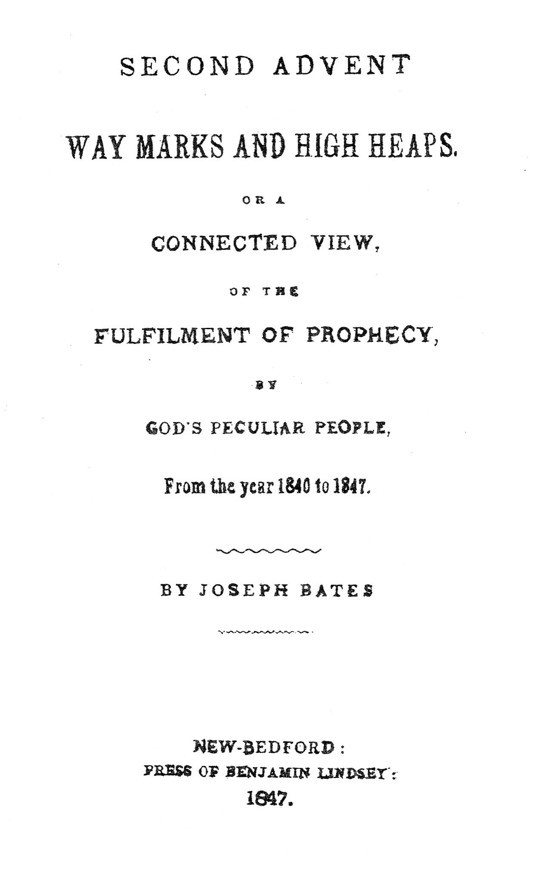
Second Advent Way Marks and High Heaps · 1847
Or a Connected View of the Fulfilment of Prophecy, by God’s Peculiar People, From the Year 1840 to 1847.
Before modern denominational institutions multiplied, the retired sea captain preserved the Advent believers’ prophetic pathway. This is a witness from the generation that lived through it.
Read the original 1847 book →Every anxious traveller knows what a relief it is to his mind to find a guide board, a mile stone, or a post. But the mariner has to be more particular.
Bates, “To the Little Flock.” Read his guide-board and mariner analogy. He contrasts a ship’s dead reckoning with observations of the sun, moon, and stars, then calls Advent believers to examine their own pathway.
His preface says the book’s purpose is to strengthen and encourage those keeping God’s commandments and the testimony of Jesus to hold to their past experience. Read the complete 1847 preface.
Page numbers count the PDF scans, including covers and preliminary leaves. Scroll to read and turn pages at the edge; drag to pan; use Ctrl+scroll to zoom. Recenter restores the fitted width.
An eyewitness record · J. N. Loughborough
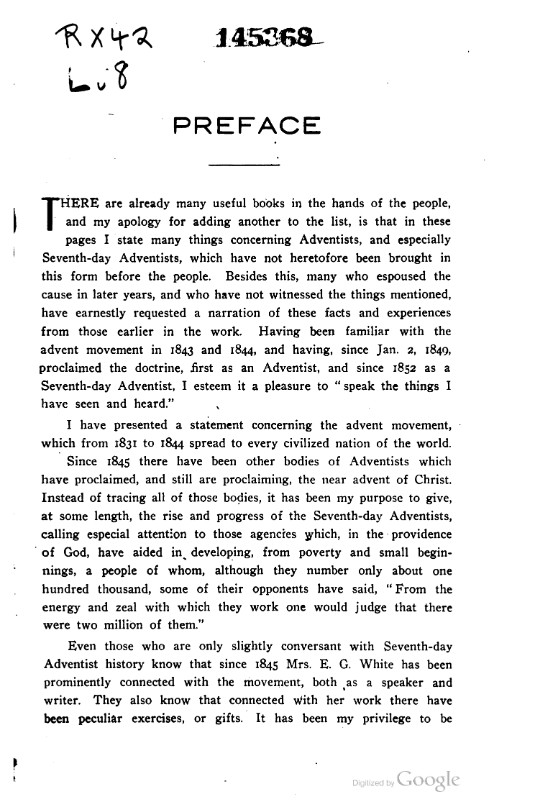
Its Rise and Progress · Preface dated May 1, 1905
Loughborough knew the Advent movement in 1843 and 1844. In his own preface, he dates his preaching as an Adventist from January 2, 1849, and as a Seventh-day Adventist from 1852.
His closing counsel is Paul’s: “Prove all things; hold fast that which is good.” The title is on scan 3; the preface on scans 1–2 preserves the dates and his invitation to examine the record.
Open Loughborough’s book page →Page numbers count the PDF scans, including covers and preliminary leaves. Scroll to read and turn pages at the edge; drag to pan; use Ctrl+scroll to zoom. Recenter restores the fitted width.
The printed witness · James White
The early papers bring the Sabbath, sanctuary, commandments, and Advent experience into their own published setting. Read the pages themselves and follow the message beyond a modern summary.
Explore The Present Truth collection →
Page numbers count the PDF scans, including covers and preliminary leaves. Scroll to read and turn pages at the edge; drag to pan; use Ctrl+scroll to zoom. Recenter restores the fitted width.
Written in vision · The historical charts
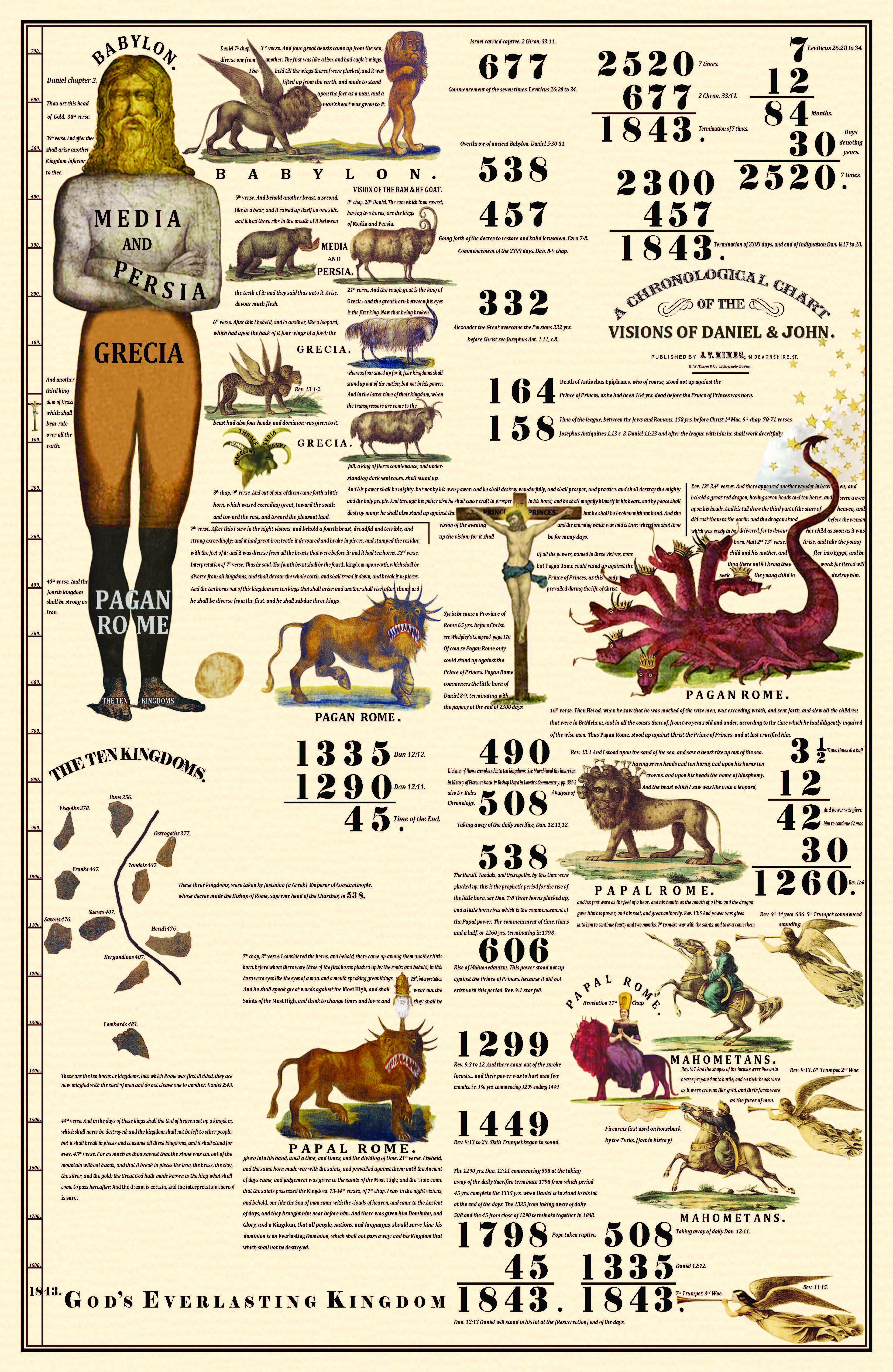
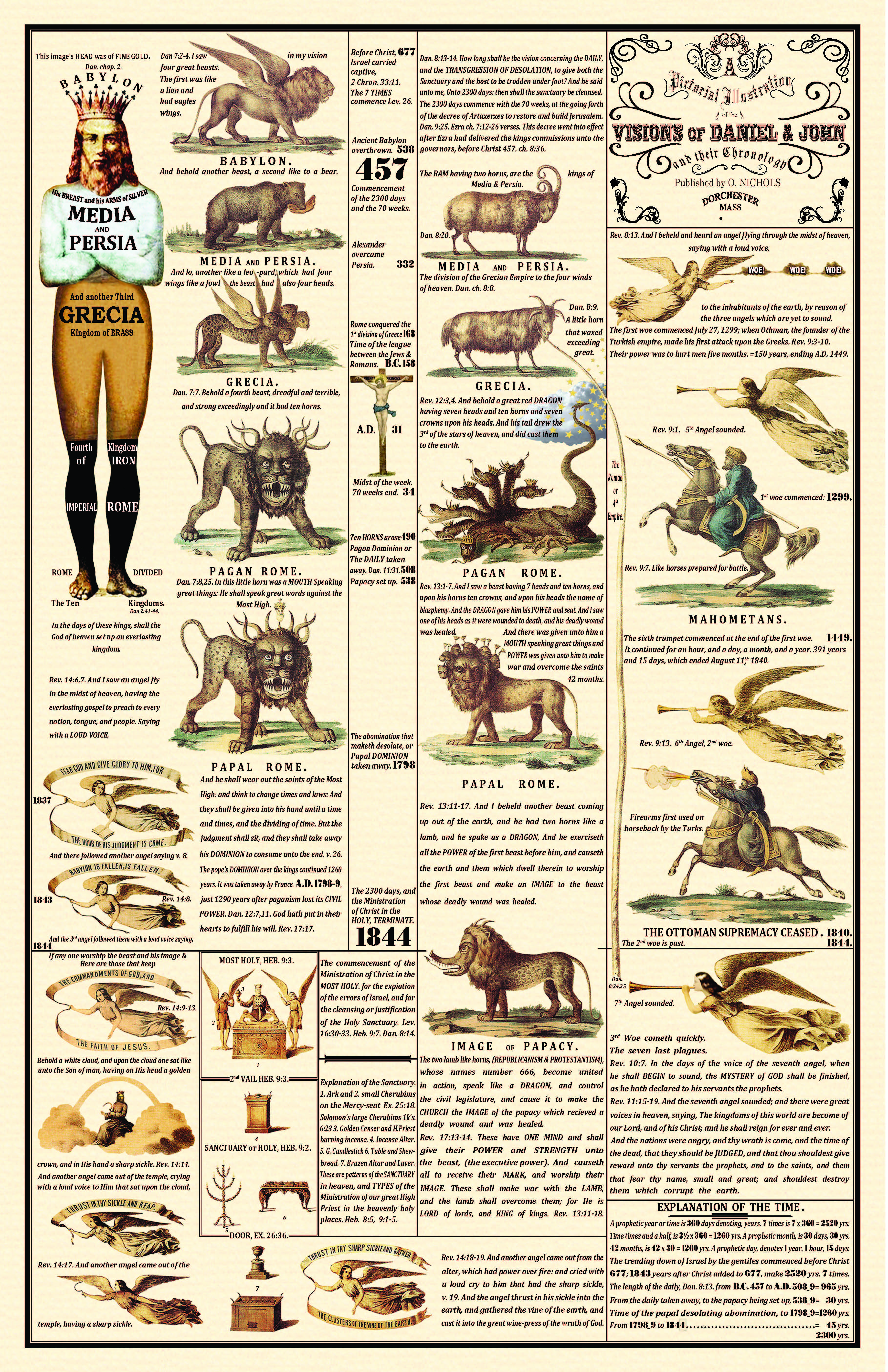
Preserve the charts. Study the prophecies. Test the explanations. Remember the movement. These historical witnesses bring Daniel’s kingdoms and the prophetic periods before your eyes; Scripture remains the test of every interpretation.
Read Uriah Smith’s 1864 Key to the Prophetic Chart · Meet Charles Fitch
The jewels · The final book in this reading pathway
A casket of jewels, scattered treasures, and the work of restoration: read William Miller’s dream with James White’s introduction and notes. Let the record lead you back to the message—not merely to a memory of it.
Explore the dream and the jewels →
Page numbers count the PDF scans, including covers and preliminary leaves. Scroll to read and turn pages at the edge; drag to pan; use Ctrl+scroll to zoom. Recenter restores the fitted width.
Do not leave their words unopened
Open the papers. Restore the jewels. Share the light.
The books were not written to sleep on a shelf. Hear the Advent witnesses in their own words, read the testimony in its context, and carry the message to another heart.
At Repeat Their Words, discover the call to republish the pioneers’ witness and bring the original Advent message before a new generation.
Let their words speak to you →03 · The original witnesses
William Miller proclaimed the Advent message. Bates defended the Sabbath. James White labored to publish the early teachings. Ellen White called believers to remember the Lord’s leading. Hiram Edson and Crosier contributed to the sanctuary understanding. Andrews and Loughborough preserved and defended the record.
Read their testimony in the light of Scripture. Let the pioneers speak in their own words!
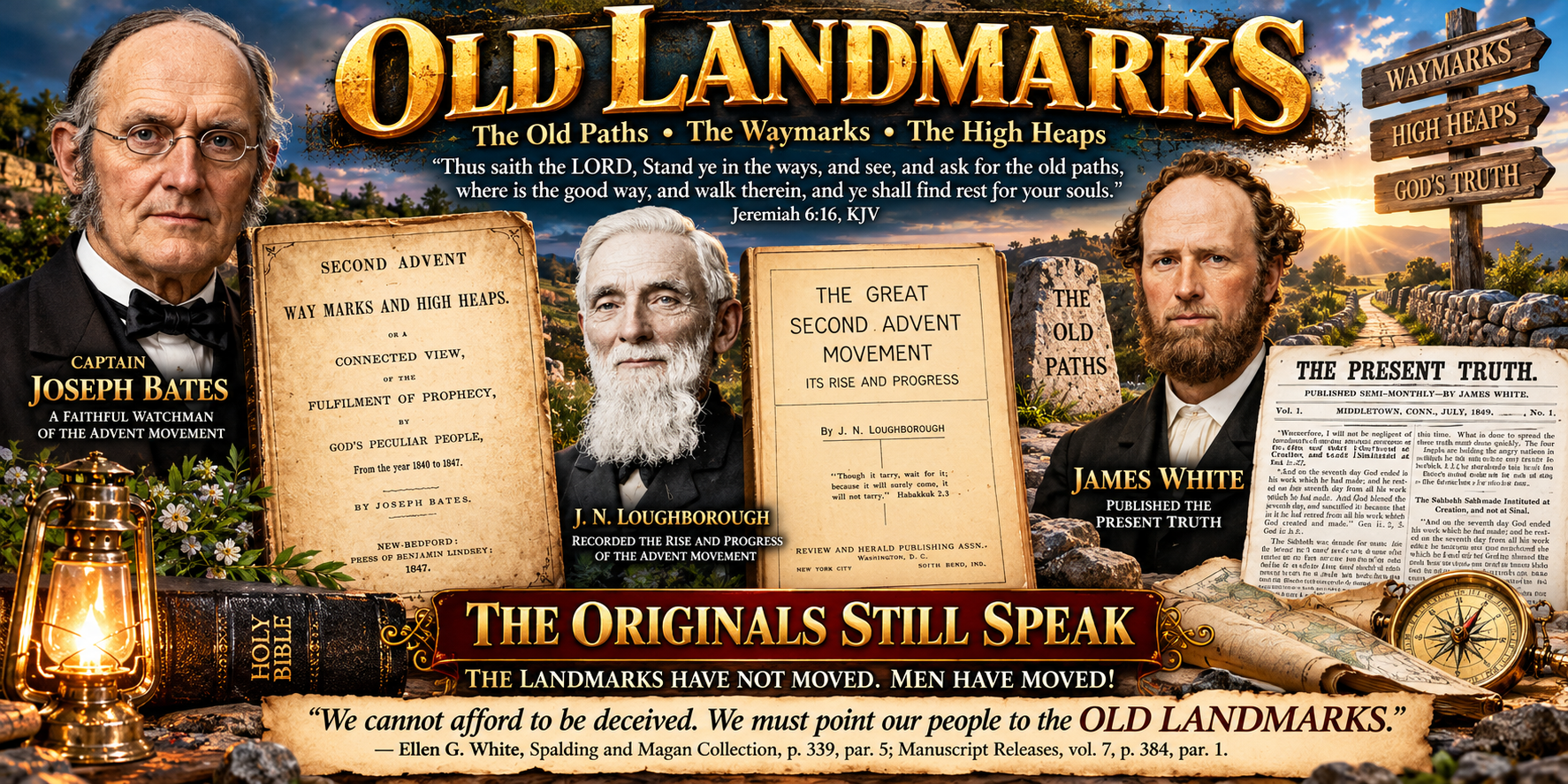
The sea captain who defended the Sabbath and recorded the waymarks.
Publisher of The Present Truth and the Advent Review.
The landmarks, the three messages, and the call to remember God’s leading.
The prophetic chart, Daniel, and the Revelation.
A defender of the Sabbath and student of prophetic history.
An early minister preserving what he had seen and heard.
William Miller · Hiram Edson · O. R. L. Crosier · Meet all the Advent pioneers
The original foundation · The question for modern religion
“Thy word is truth.” — John 17:17, KJV. A church name cannot save a soul. A corporate charter cannot seal a saint. A majority vote cannot rewrite the Word of God.
Has institutional authority displaced Scripture?
Is His heavenly work still central?
Is the warning proclaimed in its fullness?
Is the fourth commandment upheld?
Are obedience and living faith both upheld?
Are the original books and charts still being taught?
Are later interpretations being substituted for original evidence?
Truth is not established by trademark, constitution, institution, or ecclesiastical popularity. Every doctrine, old or new, must be tested by the Word.
Ellen White’s Manuscript 13, 1889 connects the 1844 experience with the heavenly sanctuary, the three angels’ messages, the commandments and faith of Jesus, the temple and ark, the Sabbath, and the nonimmortality of the wicked.
Second Advent Way Marks and High Heaps records a connected view of the fulfilment of prophecy from 1840 to 1847. Bates opens with Jeremiah 31:21 and uses a mariner’s navigation to illustrate remembering the Advent pathway.
No. Rise and Progress of the Seventh-day Adventists is the 1892 book. The Great Second Advent Movement: Its Rise and Progress contains his preface dated May 1, 1905. Both can be studied here.
The invitation is to Christ
The call is not to worship the past. It is to remember God’s leading, reject falsehood, and walk in the light of His Word. Genuine new light will withstand Scripture’s test; it will not require surrendering established biblical truth.
Back to the Bible. Back to the sanctuary.
Back to the Sabbath. Back to the three angels’ messages.
“Here is the patience of the saints: here are they that keep the commandments of God, and the faith of Jesus.”Revelation 14:12 · KJV
“Earnestly contend for the faith which was once delivered unto the saints.” — Jude 1:3, KJV.
“The repairer of the breach, The restorer of paths to dwell in.” — Isaiah 58:12, KJV.
“And the Spirit and the bride say, Come.” — Revelation 22:17, KJV.