The Opening Heavens
A connected view of the testimony of the prophets and apostles concerning the opening heavens
Bates sets the prophets’ and apostles’ testimony about the heavens opening at Christ’s coming beside the astronomy of his day.
Press Esc to close · / or Ctrl+K to open
Adventist pioneer library · 1846–1877
Captain Joseph Bates (1792–1872), the sea captain who carried the seventh-day Sabbath into the Advent movement, published his major books and tracts between 1846 and 1868. SundayLaw.com preserves seven of them as free PDF scans of the original printings, together with James White’s 1877 edition of his life and the handwritten logbook of the brig he commanded in 1827–1828.
Read them in order and the record shows how the pioneers moved from the 1844 disappointment to the Sabbath, the sanctuary, and the sealing message of Revelation 7 and 14.
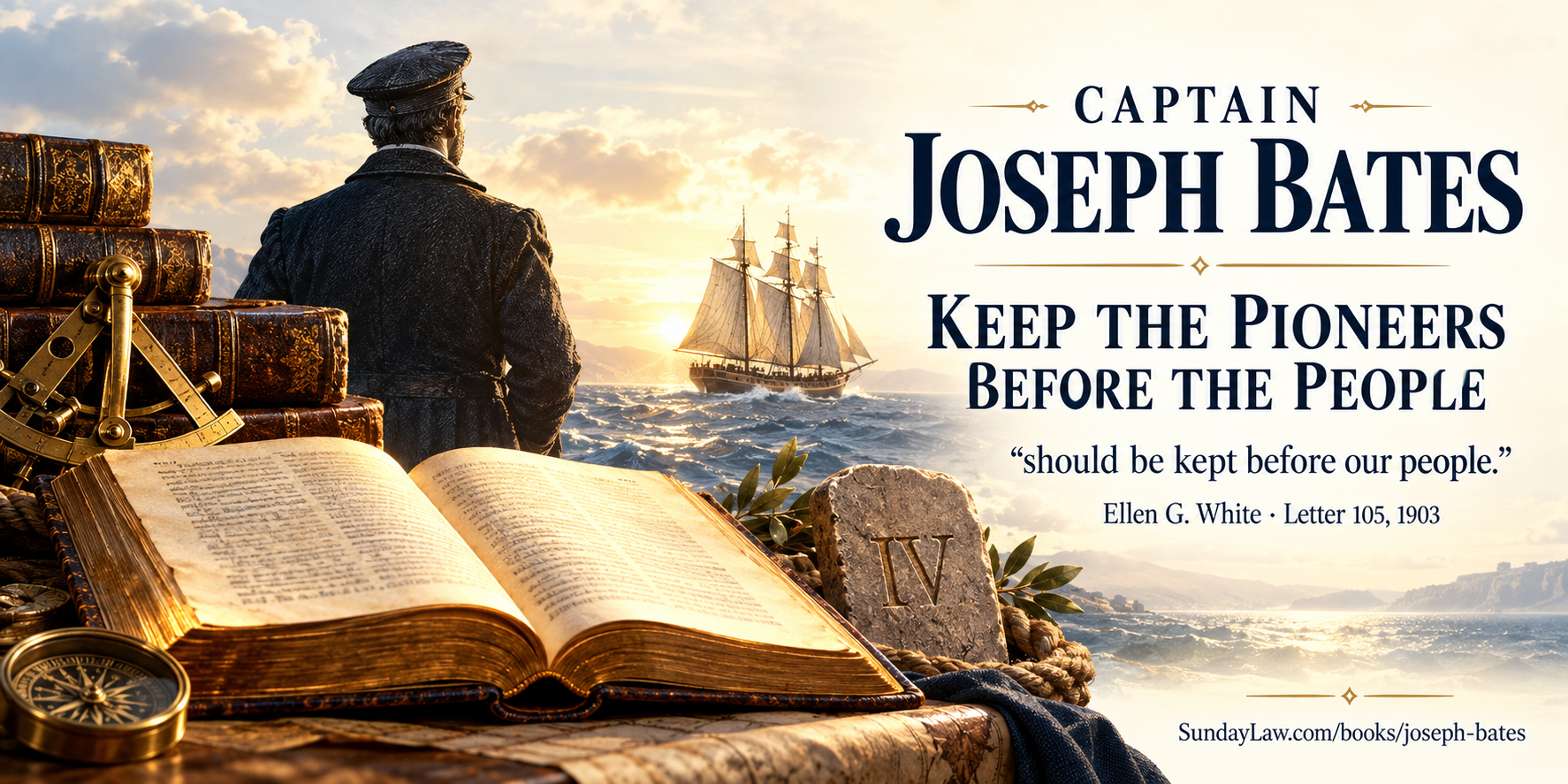
“The experience of William Miller and his associates, of Captain Joseph Bates, and of other pioneers in the Advent message should be kept before our people.”
— Ellen G. White, Letter 105, 1903 (to G. I. Butler, Elmshaven, June 1, 1903), par. 4
In the same letter she wrote that “the record of the experience through which the people of God passed in the early history of our work must be republished.” This library answers that call: Bates’s own books, in the original printings, free to read and share.
Listed in the order he published them. Read opens the PDF in a new tab; Download saves it; Copy link copies a shareable link to that book.
A connected view of the testimony of the prophets and apostles concerning the opening heavens
Bates sets the prophets’ and apostles’ testimony about the heavens opening at Christ’s coming beside the astronomy of his day.
First edition
The tract that carried the seventh-day Sabbath to the Advent believers. James and Ellen White began keeping the Sabbath in the autumn of 1846 after reading it.
Enlarged 1847 edition
Bates revised and enlarged his Sabbath argument within a year of the first printing.
A connected view of the fulfilment of prophecy by God’s peculiar people, 1840 to 1847
The pioneer’s own record of the prophetic waymarks from 1840 through the midnight cry and October 22, 1844.
And the commandments of God, with a further history of God’s peculiar people, 1847 to 1848
Written in the year of the Sabbath Conferences, it continues the Way Marks history and defends the fourth commandment.
A hundred forty-four thousand of the servants of God being sealed
Bates identifies the Sabbath as the seal of Revelation 7 and connects it to the 144,000.
By the Scriptures, with a chart
A short study of the earthly sanctuary as the type and Christ’s ministry in the heavenly sanctuary as the antitype.
A long life on shipboard, impressment and service on British war ships, and his later Advent labors
His life in his own words: cabin boy, impressed sailor, Dartmoor prisoner, sea captain, reformer, and Advent preacher.
Edited by James White
After Bates died in 1872, James White edited and republished the autobiography with an introduction and closing remarks.
Mastered by Joseph Bates Jr., voyage of 9 August 1827 to 16 June 1828
A handwritten ship’s log from Bates’s seafaring years, preserved in the Old Dartmouth Historical Society whaling museum library collection.
Details you can verify on the pages of the PDFs themselves.
The logbook of the brig Empress of New Bedford, Massachusetts, is catalogued as mastered and kept by Joseph Bates Jr. for a voyage from 9 August 1827 to 16 June 1828. It runs 116 scanned pages.
Source: Empress (Brig) of New Bedford logbook, Old Dartmouth Historical Society whaling museum library collectionThe University of Michigan copy of the 1868 autobiography carries a bookplate: presented by the Seventh-Day Adventist Tract Society of Michigan, organized February 24, 1872, E. H. Root, President. Bates died in Battle Creek less than a month later, on March 19, 1872.
Source: The Autobiography of Elder Joseph Bates, University of Michigan copy, bookplate pageThe 1846 first edition of The Seventh Day Sabbath, a Perpetual Sign runs 50 pages in this scan. The enlarged 1847 edition runs 63.
Source: 1846 edition and 1847 edition scansJames White worked beside Bates for more than 25 years. After Bates died, he edited the 1877 edition of his life. These are his words, from the 1877 edition (PDF).
“The author was one of those noble and godly men who though ‘dead yet speaketh.’ The editor of this work was an intimate and close fellow-laborer with Elder Joseph Bates for more than a quarter of a century. And it is with great pleasure that we give his life sketches, with introduction and closing remarks, in this volume.”
— James White, Editor’s Preface, Battle Creek, Mich., August 16, 1877
“When we first became acquainted with Elder Bates, in 1846, he was fifty-four years old. His countenance was fair, his eye was clear and mild, his figure was erect and of fine proportions, and he was the last man to be picked out of the crowd as one who had endured the hardships and exposure of sea life, and who had come in contact with the physical and moral filth of such a life for more than a score of years.”
— James White, Remarks by the Editor, Life of Elder Joseph Bates (1877), p. 311
“Elder Bates was a true gentleman. … True, he would speak what he regarded truth with great freedom and boldness; but after he had set forth principles, and urged the importance of obedience, he was willing to leave his hearers to decide for themselves.”
— James White, Remarks by the Editor, pp. 311–312
“That, as a tribute of respect, we recognize in the decease of our beloved brother, Elder Joseph Bates, the loss of a great and good man, eminent for piety and Christian virtue; a pioneer in the third angel’s message, always at his post of duty. We miss him in our assemblies, at our Conference, in our churches, at our fireside homes; and while we deeply mourn our loss, we will remember his counsels, imitate his virtues, and endeavor to meet him in the kingdom of God.”
— Resolution of the Michigan Conference of S. D. Adventists, September 5, 1872, printed by James White, p. 320
In Spiritual Gifts, Volume 2 (1860), Ellen White told how she met Bates in 1846 and how the Lord confirmed the Sabbath truth he was preaching.
The halo around the fourth commandment
“In 1846, on a visit to New Bedford, Mass., I became acquainted with Bro. Joseph Bates. He was keeping the Sabbath, and urged its importance. I did not feel its importance, and thought that Bro. B. erred in dwelling upon the fourth commandment more than the other nine. But the Lord gave me a vision. I was conducted to the second vail. It was lifted, and I beheld the ark, and on it the mercy seat. Jesus raised the cover of the ark, and I beheld the tables of stone on which the ten commandments were written. I was amazed as I saw the fourth commandment. A halo of glory was all around it; for it was the only one of the ten which points out to man who the living God is, the maker of heaven and earth.”
— Ellen G. White, Spiritual Gifts, Vol. 2, p. 82, para. 1
“This is of the Lord”
“Bro. J. Bates was present. He did not then fully believe that my visions were of God. … After I came out of vision I related what I had seen. Bro. Bates asked if I had studied astronomy. I told him I had no recollection of ever looking into an astronomy. Said he, ‘This is of the Lord.’ I never saw Bro. Bates so free and happy before. His countenance shone with the light of Heaven, and he exhorted the church with power.”
— Ellen G. White, Spiritual Gifts, Vol. 2, p. 83, para. 1
Scripture says the works of the faithful dead follow them, and that Jesus prayed for everyone who would believe through His disciples’ word. When we repeat the pioneers’ words, their testimony keeps working.
“And I heard a voice from heaven saying unto me, Write, Blessed are the dead which die in the Lord from henceforth: Yea, saith the Spirit, that they may rest from their labours; and their works do follow them.”
— Revelation 14:13 (KJV)
“Neither pray I for these alone, but for them also which shall believe on me through their word;”
— John 17:20 (KJV)
The first volume of Spiritual Gifts is the original 1858 Great Controversy. In it Ellen White describes Jesus rebuking Thomas for doubting the witnesses, and then applies it to the Advent messages.
“Blessed are they that have not seen”
“But at this time Thomas was not present. He would not humbly receive the report of the disciples; but firmly, and self-confidently affirmed that he would not believe, unless he should put his fingers in the prints of the nails, and his hand in his side where the cruel spear was thrust. In this he showed a lack of confidence in his brethren. And if all should require the same evidence, but few would receive Jesus, and believe in his resurrection. But it was the will of God that the report of the disciples should go from one to the other, and many receive it from the lips of those who had seen and heard. God was not well pleased with such unbelief. And when Jesus met with his disciples again, Thomas was with them. The moment he beheld Jesus he believed. But he had declared that he would not be satisfied without the evidence of feeling added to sight, and Jesus gave him the evidence he had desired. Thomas cried out, My Lord and my God. But Jesus reproved Thomas for his unbelief. He said to him, Thomas, because thou hast seen me, thou hast believed; blessed are they that have not seen and yet have believed.”
— Ellen G. White, Spiritual Gifts, Vol. 1 (1858 Great Controversy), p. 74, para. 2
“These messages have been crucified”
“So, I saw, that those who had no experience in the first and second angels’ messages must receive them from those who had an experience, and followed down through the messages. As Jesus was crucified, so I saw that these messages have been crucified. And as the disciples declared that there was salvation in no other name under heaven, given among men; so, also, should the servants of God faithfully and fearlessly declare that those who embrace but a part of the truths connected with the third message must gladly embrace the first, second and third messages as God has given them, or have no part nor lot in the matter.”
— Ellen G. White, Spiritual Gifts, Vol. 1 (1858 Great Controversy), p. 75, para. 1
Receive it from those who had an experience
Those who had no experience in the first and second angels’ messages were to receive them from those who did. Bates, James White, and Ellen White were among them. The Repeat page begins with the 1858 Great Controversy and gathers the messages they preached so you can read them, repeat them, and pass them on.
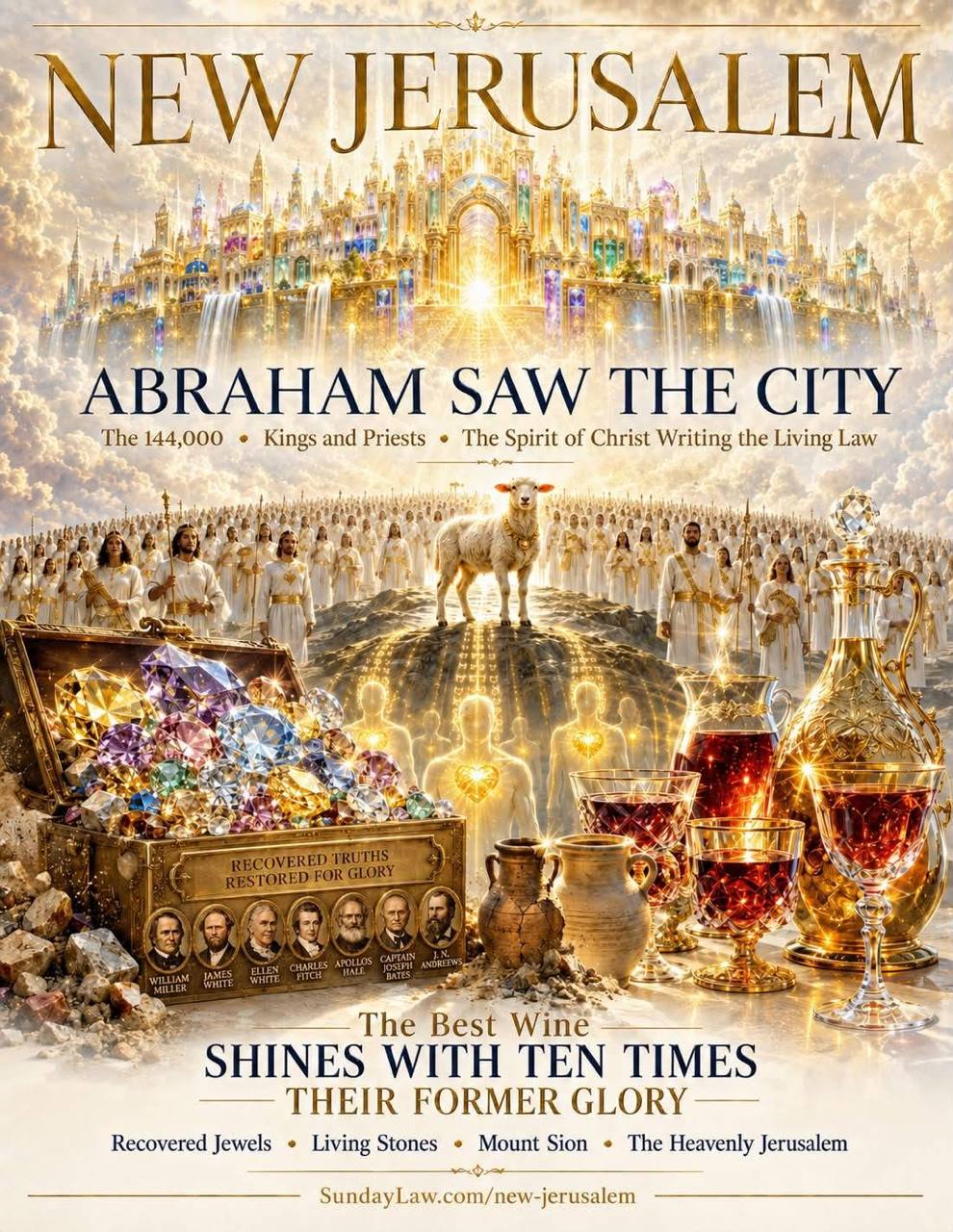
Featured · James White · 1849
“I have a message for you. You must begin to print a little paper and send it out to the people. Let it be small at first; but as the people read, they will send you means with which to print, and it will be a success from the first. From this small beginning it was shown to me to be like streams of light that went clear round the world.”
— Ellen G. White, Life Sketches, p. 125.2
James White’s paper carried the Sabbath and sealing message that Joseph Bates had pressed on the scattered flock. Read the story, then open the original paper.
Turn the pages of Bates’s own life story right here, or open the full autobiography book page.
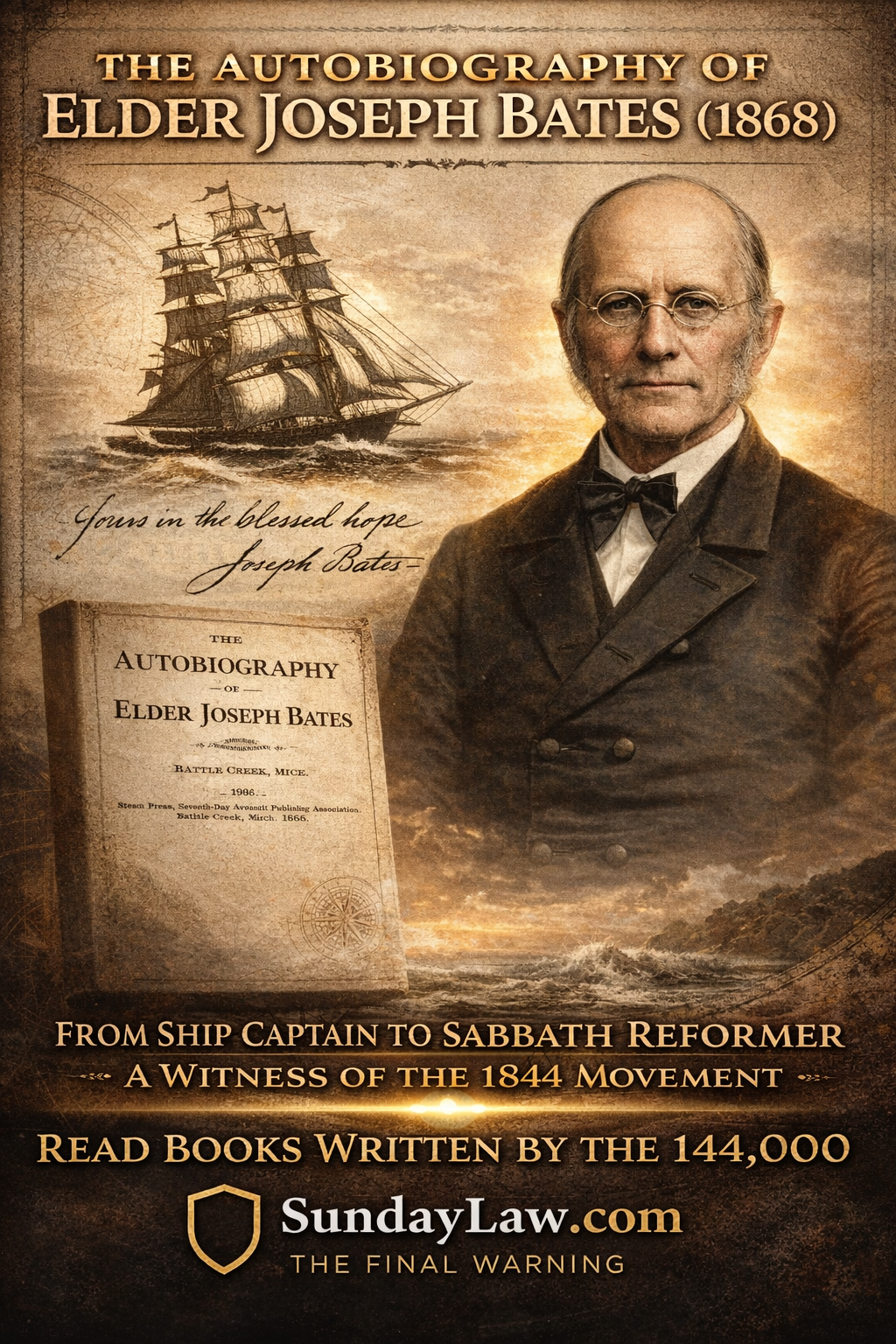
Drag to pan, scroll to read, use Previous/Next to change pages, and zoom relative to the fitted page width.
Additional copies of the same books from other library scans, kept so older links keep working.
In Letter 105, 1903, written to G. I. Butler on June 1, 1903, Ellen White wrote: “The experience of William Miller and his associates, of Captain Joseph Bates, and of other pioneers in the Advent message should be kept before our people.”
Captain Joseph Bates’s major books and tracts include The Opening Heavens (1846), The Seventh Day Sabbath, a Perpetual Sign (1846, enlarged 1847), Second Advent Way Marks and High Heaps (1847), A Vindication of the Seventh-day Sabbath (1848), A Seal of the Living God (1849), An Explanation of the Typical and Anti-typical Sanctuary (1850), and The Autobiography of Elder Joseph Bates (1868).
Yes. Every Bates book on this page is a free PDF scan of an original printing. Use Read to open it in your browser or Download to save a copy.
Start with The Seventh Day Sabbath, a Perpetual Sign (1846) for the Sabbath message, Second Advent Way Marks and High Heaps (1847) for the prophetic waymarks, and the 1868 Autobiography for his life story.
James White edited The Early Life and Later Experience and Labors of Elder Joseph Bates (1877), republishing Bates’s autobiography after his death in 1872 with an introduction and closing remarks.