Read the publication record
The title page, scan 11, announces five languages and the one hundred and sixtieth thousand. The copyright leaf, scan 12, records 1897. These two dates preserve different parts of the book’s publishing history.
Press Esc to close · / or Ctrl+K to open
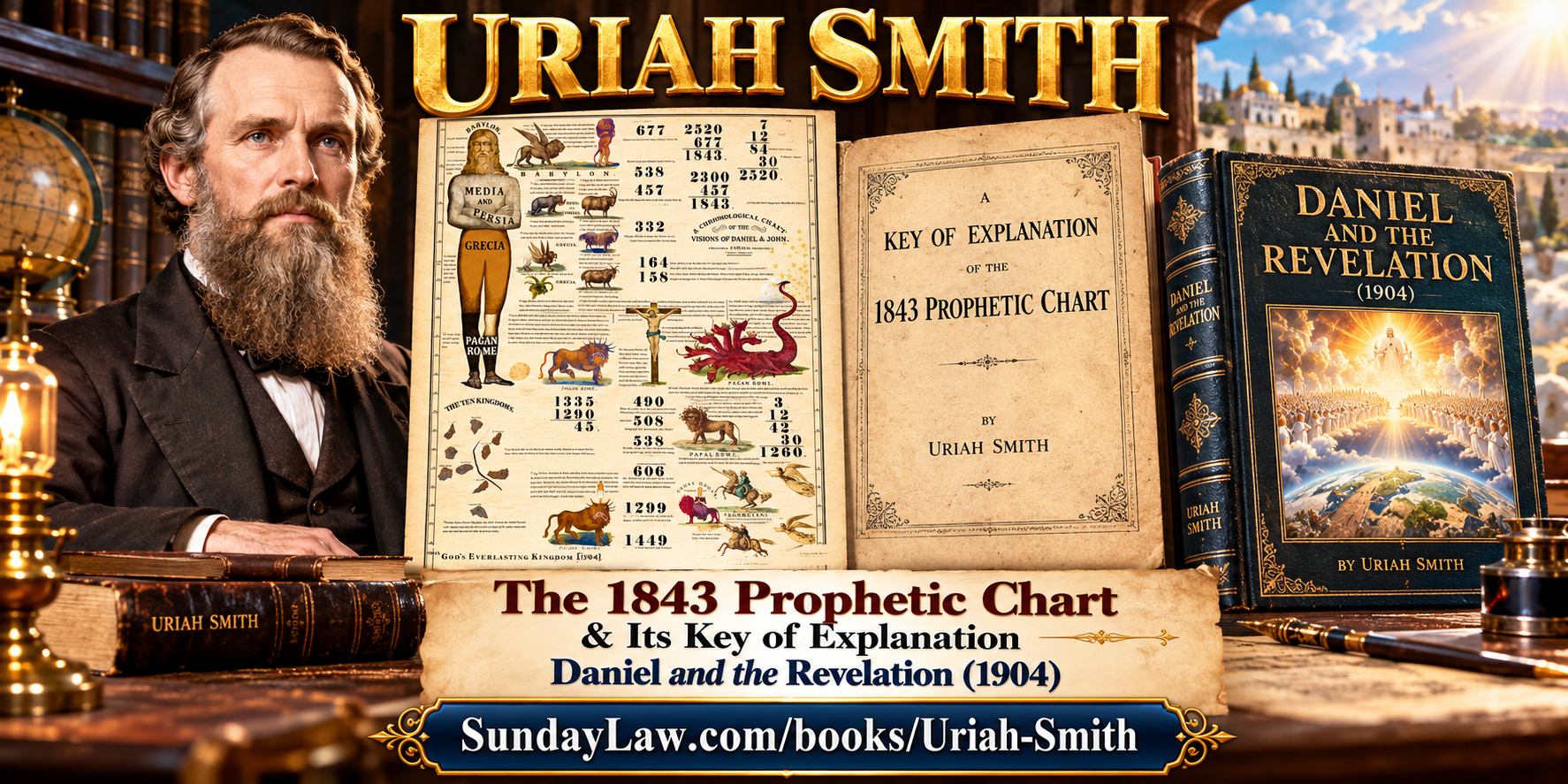
Read Uriah Smith’s Daniel and the Revelation in the 1904 historical scan, then study his 1864 Key to the Prophetic Chart alongside the 1843 chart and the 1850 chart explanation. Follow the prophetic periods, the sanctuary, and the three angels’ messages through the pioneers’ printed witness.
Open the complete 884-scan PDF below. The title page names the Review and Herald Publishing Company, Battle Creek, Michigan, and dates this publication to 1904. Its subtitle brings the purpose into focus: Response of History to the Voice of Prophecy.
The title page, scan 11, announces five languages and the one hundred and sixtieth thousand. The copyright leaf, scan 12, records 1897. These two dates preserve different parts of the book’s publishing history.
The preface, scan 13, sets out three aims: understand the Bible books, examine the fulfillment of prophecy in history, and draw lessons for practical Christian duty. Study the argument with Scripture open beside it.
Page numbers count the PDF scans, including covers and preliminary leaves. Scroll to read and turn pages at the edge; drag to pan; use Ctrl+scroll to zoom. Recenter restores the fitted width.
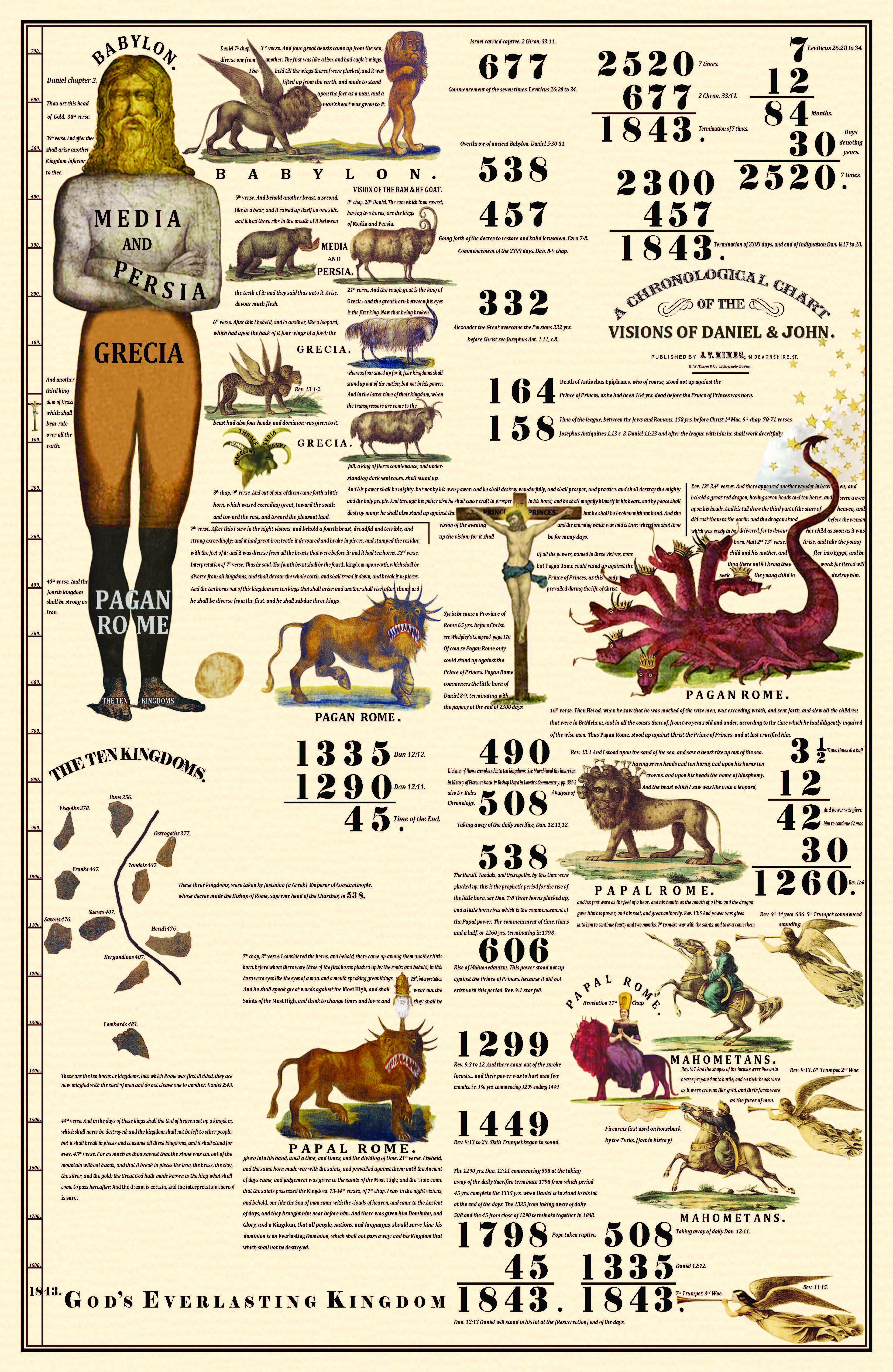
The 1843 chart carried the proclamation into public view. Smith’s Key to the Prophetic Chart, published in 1864, explains the image of Daniel 2, the beasts of Daniel 7, Daniel 8, the three angels of Revelation 14, and the prophetic trumpets. Its title and contents page records the Battle Creek Steam Press imprint.
Page numbers count the PDF scans, including covers and preliminary leaves. Scroll to read and turn pages at the edge; drag to pan; use Ctrl+scroll to zoom. Recenter restores the fitted width.
Study the 1850 chart together with its eight-page explanation. The explanation opens with the patterns given to Moses and follows the ministry of Jesus in the heavenly holy places. It connects the chart’s visual teaching with the Sabbath and the sanctuary.
Page numbers count the PDF scans, including covers and preliminary leaves. Scroll to read and turn pages at the edge; drag to pan; use Ctrl+scroll to zoom. Recenter restores the fitted width.
Page numbers count the PDF scans, including covers and preliminary leaves. Scroll to read and turn pages at the edge; drag to pan; use Ctrl+scroll to zoom. Recenter restores the fitted width.
SundayLaw.com sanctuary study · Read William Miller’s life and dream
The disappointment did not overthrow the prophetic time. It exposed the mistaken assumption about the event. October 22, 1844 did not mark Christ returning to the earth; it marked the opening of the door into the Most Holy Place of the heavenly sanctuary, where the people of God must follow Jesus by faith.
The 1843 chart carried the first great proclamation. The 1850 chart preserved and clarified the advancing light after the disappointment. Together they point forward to the sanctuary, the judgment, the royal perpetual law of the kingdom of God, and the marriage of the Lamb to His commandment-keeping people.
In that light, Brother Miller’s Dream becomes more than a historical curiosity. The jewels are gathered again into the truth, set in the foundation of the New Jerusalem, and the people who keep the commandments of God and the faith of Jesus are called to shine as the bride of Christ.
Follow the early printed sanctuary witness in A Word to the Little Flock, page 2, and continue with the sanctuary study.
Follow Ellen White’s warning alongside the documentary history of Adventist publishing. The 78-page investigation reproduces the 1882 testimony dispute involving Uriah Smith and examines the record of changing Spirit of Prophecy books. Open the study, compare its cited documents, and return to the original publications.
Read the original books, compare their explanations with Scripture, and share their witness. Visit Repeat the pioneers’ words, the pioneer book collection, and the 1843 and 1850 chart study.
Press Esc to close · / or Ctrl+K to open