1883 · 32 chapters
The contents begin with “Saul the Persecutor” and close with “Martyrdom of Paul and Peter.” See the opening contents, p. v (scan 12), and final contents, p. viii (scan 15).
Press Esc to close · / or Ctrl+K to open
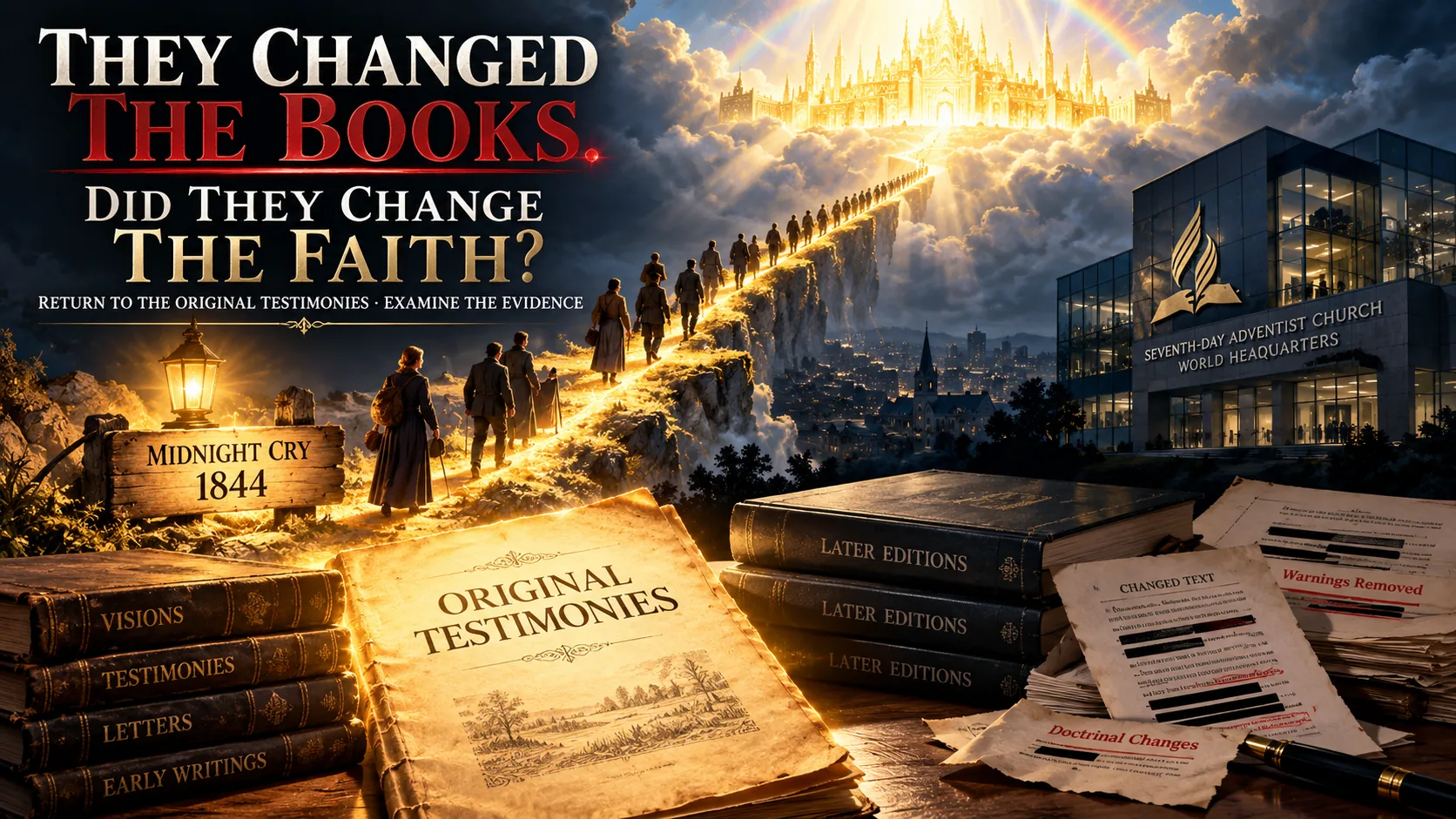
What was written? What was changed? What was omitted? And who has examined the evidence?
Ellen White warned that “books of a new order would be written.” This study sets that warning beside records of editorial change, institutional decisions, and later Adventist developments—and provides the complete 78-page document for readers to explore.
The warning sets the course: follow its words through the published volumes, the book-change record, and the institutional decisions that shaped what later generations read.
Follow the chronology: The Great Controversy was revised and republished during Ellen White’s lifetime, including the 1911 edition. Post-1915 changes belong to a later chapter of the record. Read the 1911 edition beside the White Estate edition-history archive.
The documents below mark distinct moments. Their dates matter: a warning, a lifetime edition, a posthumous custodial record, and a later doctrinal vote should each be weighed on their own evidence.
In her first vision, Ellen White described the Advent people on a path toward the city, with the midnight cry as a bright light behind them and Jesus before them. Read Early Writings, pp. 14–15, and the early witness in A Word to the Little Flock.
Ellen White’s warning describes a proposed reorganization and a departure from foundational principles. Read the complete passage in Selected Messages, book 1, then compare the 1904 corporate record at April 15, 1904.
In Letter 70, Ellen White addressed A. G. Daniells and W. W. Prescott regarding a proposed “general overhauling” of books already doing good work. Explore the Daniells biography, Prescott biography, and transcribed correspondence.
The revised Great Controversy appeared while Ellen White was living. Compare its edition history with the separate question of changes made after her death; the official 1911 edition and archival account make that distinction checkable.
The Dallas Session voted on Fundamental Belief No. 2. Compare the dates, wording, and bulletin records on the 1980 page with Ellen White’s original warning and its context.
Read the early Advent testimony for yourself. The Repeat page gathers Ellen White’s appeals to reproduce the pioneers’ words and recover the old landmarks.
Sketches from the Life of Paul (1883) and The Acts of the Apostles (1911) are distinct publications. The 1911 book substantially expands the narrative to the apostolic church. Compare their structure and the wording of a shared event directly in these historical scans.
The contents begin with “Saul the Persecutor” and close with “Martyrdom of Paul and Peter.” See the opening contents, p. v (scan 12), and final contents, p. viii (scan 15).
The contents begin with “God’s Purpose for His Church” and close with “The Church Triumphant,” following chapters on Peter and John. See contents, p. vii (scan 13), and p. viii (scan 14).
“He suddenly cried out in an excited manner:”
Sketches from the Life of Paul, p. 259. The sentence introduces Festus’s interruption of Paul. Read printed p. 259 (scan 266).
“But in the full tide of his persuasive eloquence he was interrupted by Festus, who cried out,”
The Acts of the Apostles, p. 437. The sentence expands the narrative description of the same interruption. Read printed p. 437 (scan 443).
These examples establish changes in scope, organization, and narrative expression. Examine teachings paragraph by paragraph, recording both references and the surrounding context as you follow the larger investigation.
The investigation reproduces an 1882 rebuke concerning Uriah Smith and the delivery of Ellen White’s testimony to the Battle Creek church. It cites Testimony for the Battle Creek Church, pp. 29, 42–43, 46–47, and 50. Examine investigation scan 18 and the White Estate account of Smith’s stance.
On scan 19, the investigation reproduces material from Letter 14, 1883, also printed in Manuscript Releases, volume 14, pp. 1–7. The letter addresses rejected warnings and betrayal of holy trusts. Read investigation scan 19 alongside the published letter.
The testimony-delivery record and the book comparisons ask complementary questions: how were warnings received, and what did readers receive in each publication? Follow both trails through the dated documents.
The 78-page study discusses these figures in connection with editorial correspondence, historical quotations, compilation, and republication. Open their biographies and follow the cited material in the document.
The rebellion of Korah, Dathan, and Abiram stands in Scripture as a warning against challenging God’s order and turning the people from the way He has marked out (Numbers 16; Deuteronomy 11:6). SundayLaw.com applies this biblical pattern to institutional leaders who set aside the received Advent landmarks. The comparison is a theological interpretation; the dates, quotations, and votes remain open for readers to examine in their original records.
Read the warning, weigh the fruit, and follow Christ above human authority. The call is to repentance, fidelity to Scripture, and restoration of the foundation entrusted to the Advent movement.
Open any image for a larger view, zoom, and pan. Captions describe the exhibits; consult the linked documents before drawing historical conclusions.
Historical Adventism and modern Adventism: compare the documents and the foundations each presents.
A warning about efforts to unsettle confidence in the testimony and work God has given.
Compare the movement’s historical language with later public descriptions.
A scriptural lens for examining rebellion, authority, and faithfulness.
An invitation to investigate the General Conference logo and the history behind its changes.
Read the complete 78-page study document in the page reader. Follow its examination of changing the Spirit of Prophecy books, the original volumes beside the “Conflict of the Ages” series, and the evidence it presents. Turn pages, zoom to inspect the scan, or download the complete PDF.
Scroll down to read and automatically advance at the page edge, or drag to pan. Use Previous/Next to change pages; zoom with the buttons or Ctrl+scroll; Recenter resets the view.
Press Esc to close · / or Ctrl+K to open