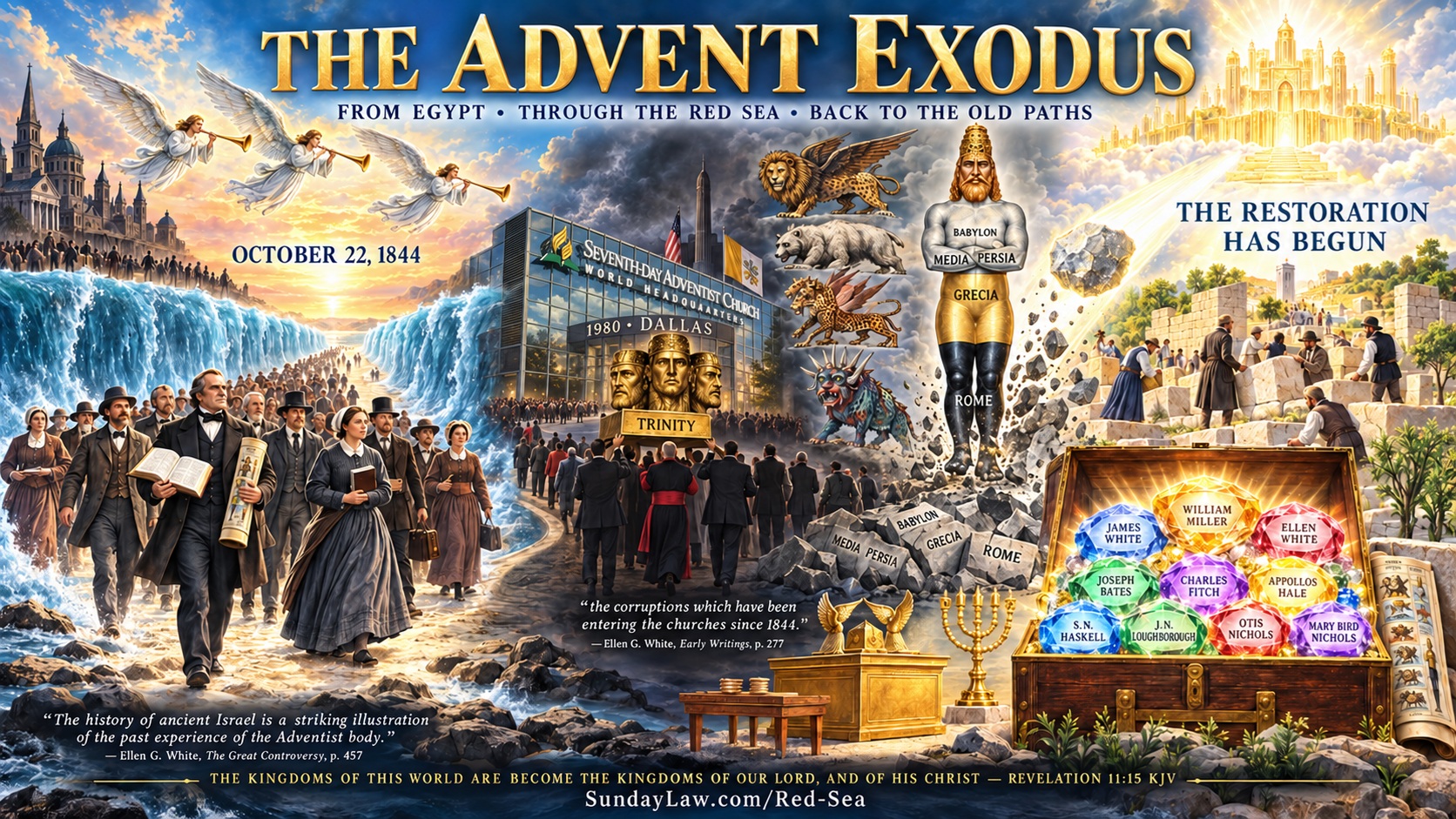
The original Seventh-day Adventist faith arose from the Advent awakening of 1840–1850. Believers studied prophecy. They kept the Sabbath. They proclaimed the judgment hour. They received the three angels' messages. They followed Christ into the heavenly sanctuary.
The name "Seventh-day Adventist" was adopted in 1860 to identify this living faith.
But imagine this: In 1904, another body incorporated under the civil law of the District of Columbia: the General Conference Corporation of Seventh-Day Adventists. This legal entity began acquiring institutional control while the original platform quietly weakened. The name remained on the letterhead. The identity shifted beneath it.
What if, over generations, believers were told that institutional loyalty was the same as doctrinal faithfulness? What if pastors who questioned the platform were counseled into silence? What if teachers who taught the investigative judgment too boldly faced administrative pressure? What if the sanctuary—once the center of Advent hope—moved to the margins of ministerial training?
Millions of sincere believers inherited the name without knowing the original platform had been exchanged. They loved the Sabbath, studied the Bible, and served faithfully—all within a system that had progressively departed from what the pioneers built. They were not rebels. They were captives of institutional momentum.
The wise virgins carried oil in their vessels and followed the Lamb into the Most Holy Place.
The foolish virgins inherited the name and remained attached to the machinery.