
THE ABC’S OF BIBLE STUDY
Diagram Bible Verses Like an English Teacher
Before arguing over a doctrine, read the sentence. Find the subject, verb, object, modifiers, clauses, and context. This series trains the eye to see what the text actually says.
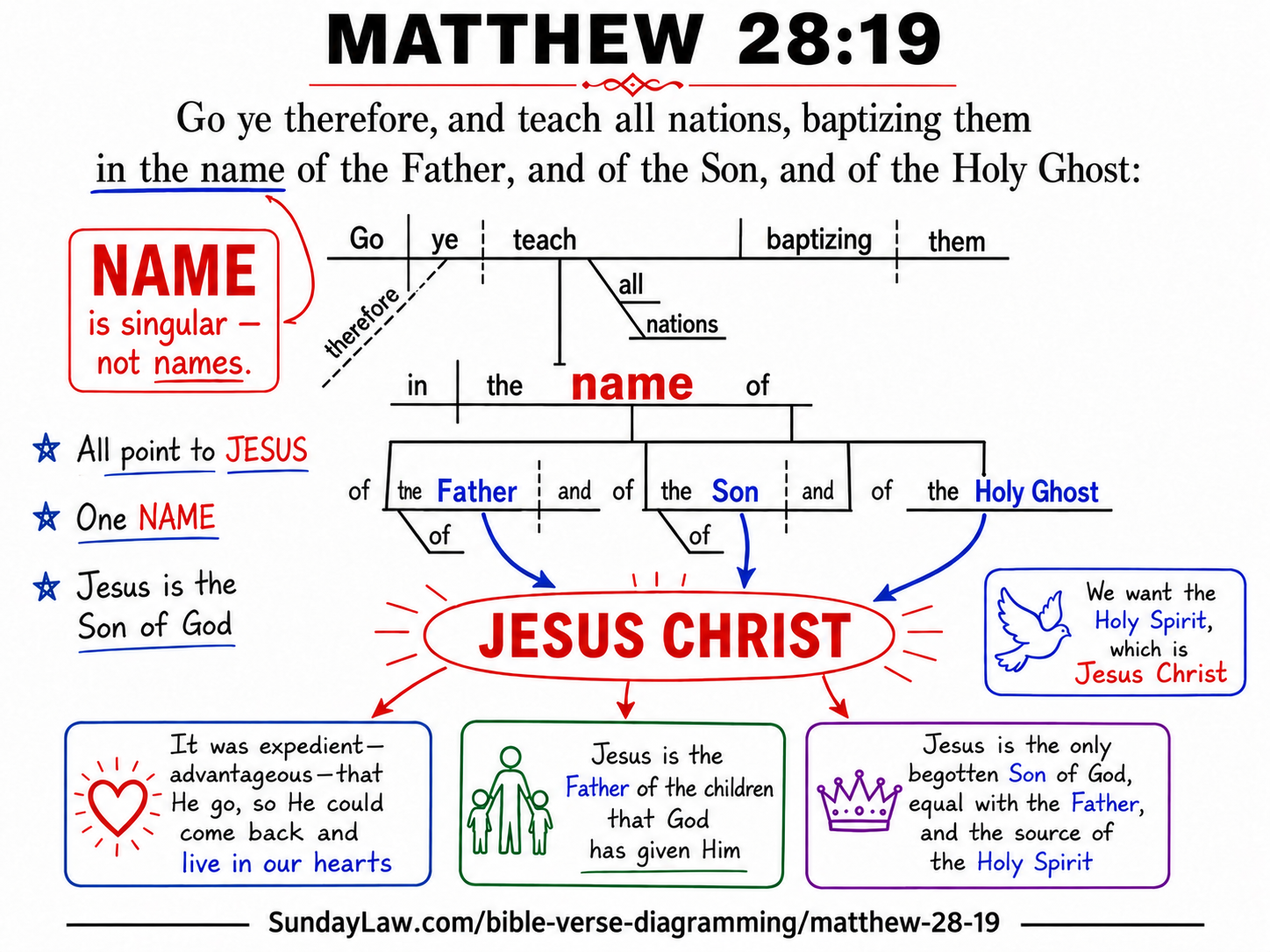
Lesson 1: Matthew 28:17–20
Diagram the complete commission in context, identify its objects and clauses, and compare it with the surrounding witnesses.
Captain William Miller’s 14 Rules
Use the Protestant rules of Bible interpretation as the series method: compare Scripture with Scripture, preserve context, and let the Bible explain the Bible.
Read the complete 14 Rules page →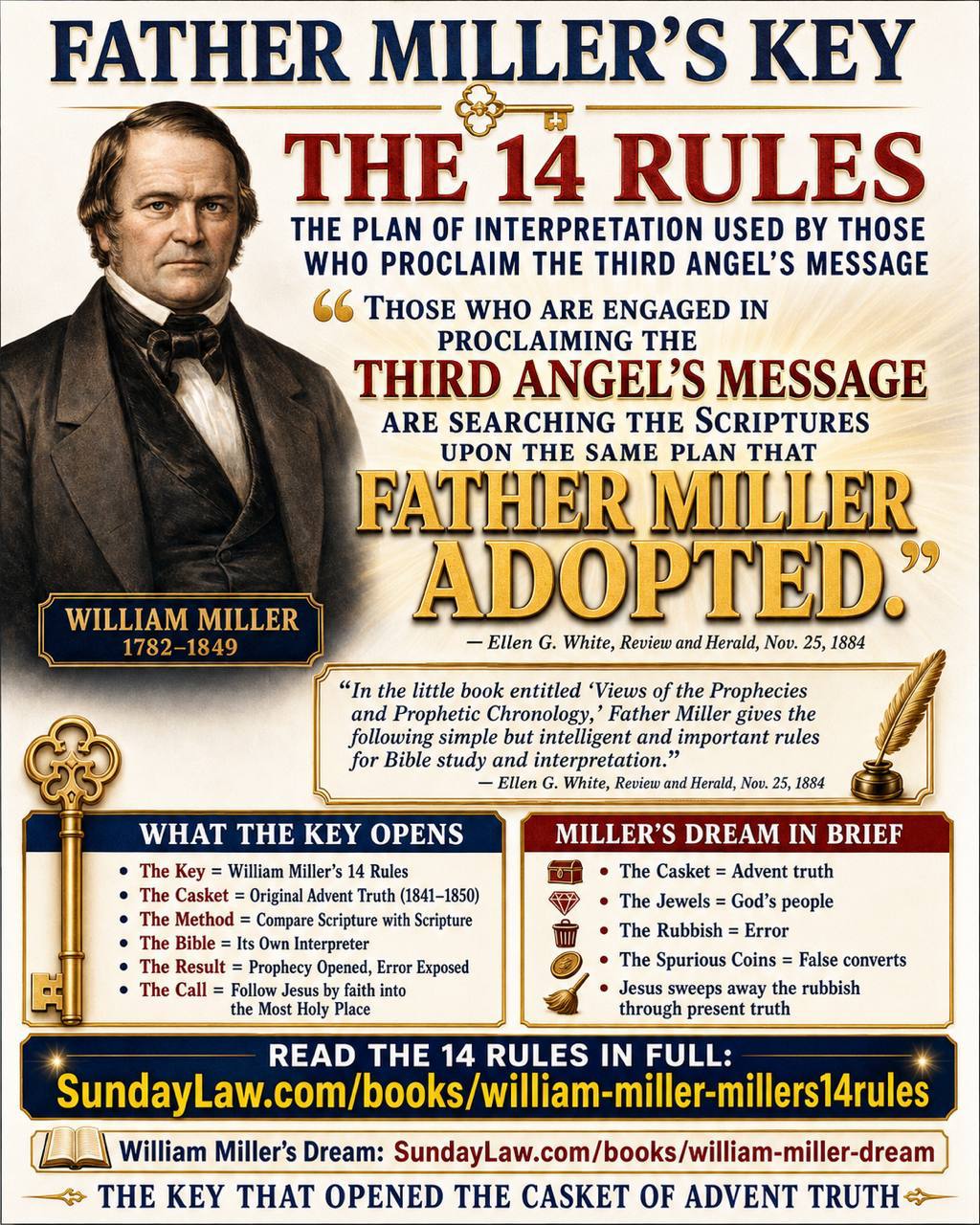
Series method
- Copy the King James Version verse and its surrounding thought exactly.
- Mark the main verb and ask who performs it.
- Identify objects, modifiers, conjunctions, and clauses.
- Compare parallel KJV passages and the immediate context.
- State only what the grammar and context establish.
Worked example: the 2300-year calculation
Daniel gives the period: 2300 days (Daniel 8:14, KJV). Miller’s rules apply the Bible’s day-for-a-year principle from Numbers 14:34 and Ezekiel 4:6, so the prophecy is read as a 2300-year period, beginning with the decree that restores Jerusalem (Daniel 9:25).
“Unto two thousand and three hundred days; then shall the sanctuary be cleansed.” — Daniel 8:14
In Bible prophecy, a day stands for a year. The test is the text and the context, not a private symbolic formula.
Easy forward count: From 457 BC to 1 BC is 456 years. Crossing from 1 BC to AD 1 is 1 year. From AD 1 to AD 1844 is 1843 years. So 456 + 1 + 1843 = 2300 years.
Easy backward check: From AD 1844 back to AD 1 is 1843 years, plus 1 year across the BC/AD boundary, plus 456 years back to 457 BC. That also equals 2300 years.
This is why the Millerite chart placed the sanctuary cleansing at the tenth day of the seventh month, corresponding to October 22, 1844.
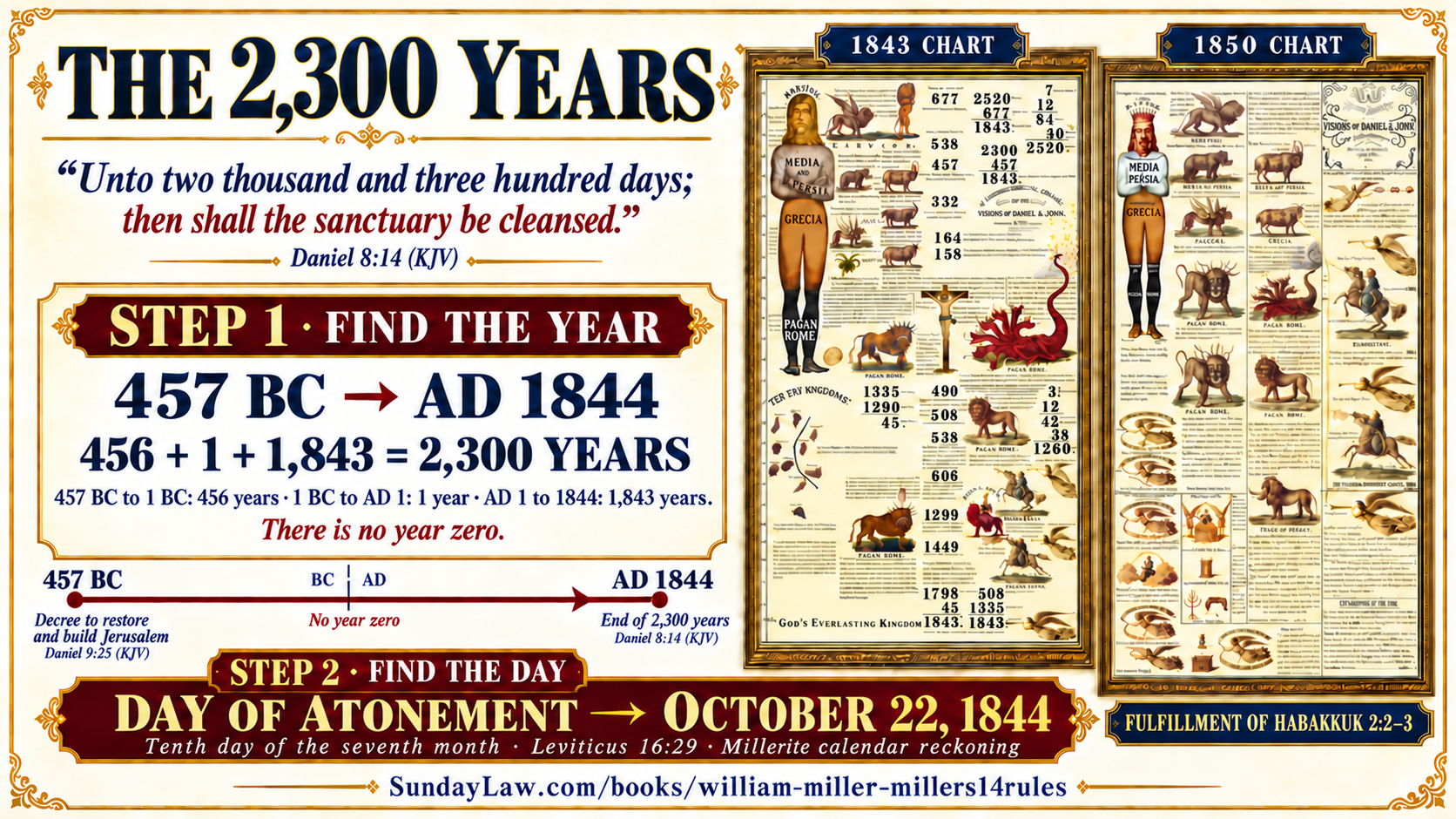

In other words, the method is not a random date calculation. It is a Bible-first process: text → year-day rule → starting point → date. Daniel gives the time period; the KJV gives the anchor text; the chart displays the historical result.